🎨
Audio Facts
Educational
Kids
Non Fiction
US region
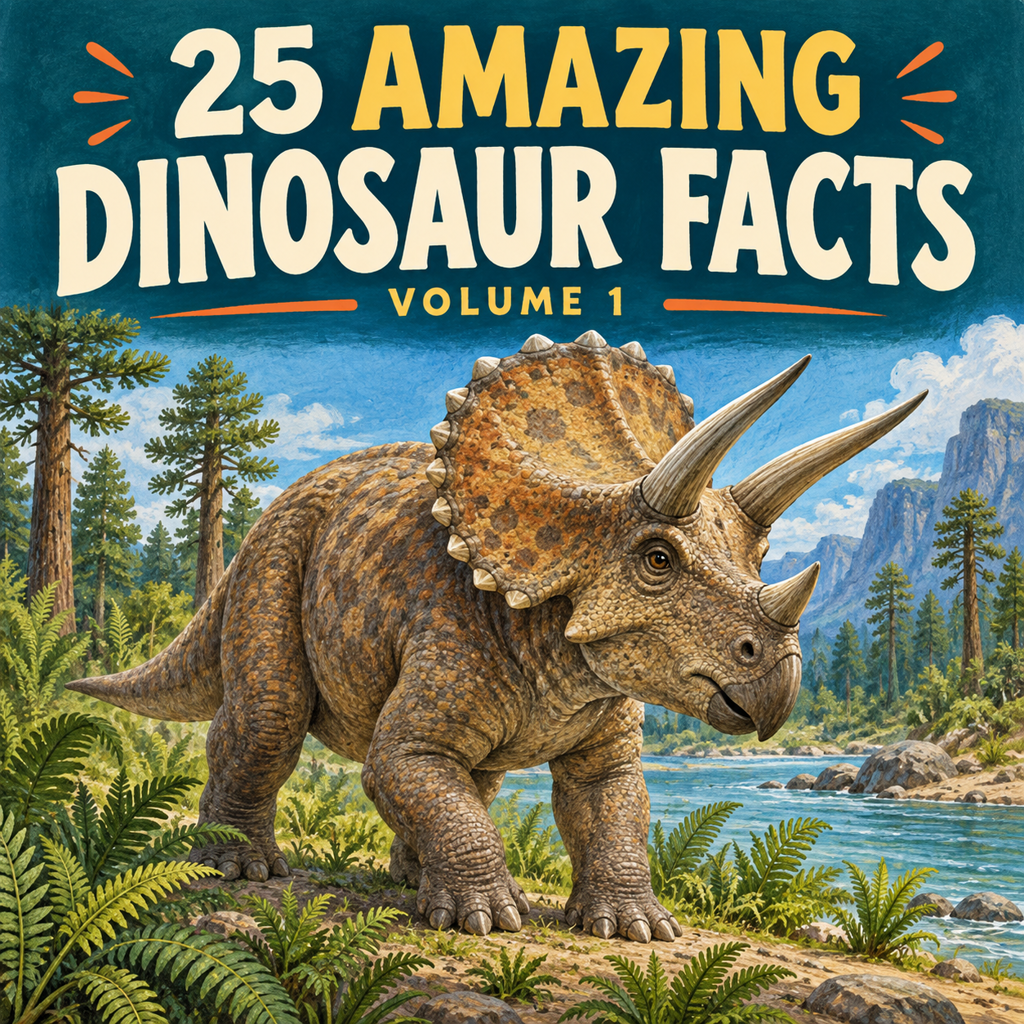
25 Amazing Dinosaur Facts
Volume 1: fossils, famous dinosaurs and the surprising link to birds
Listen
Listen to the story
Read
Read the story
Welcome to Read Listen Draw! Get ready to meet long-necked giants, horned plant eaters and dinosaurs with feathers. Explore 25 amazing facts, then look for a living dinosaur outside your window!
1. Dinosaurs were already living on Earth around 230 million years ago, during a time called the Triassic Period.
2. Dinosaur fossils have been found on all seven continents. That includes icy Antarctica!
3. Dinosaurs did not all live together. Stegosaurus lived millions of years before Tyrannosaurus rex appeared.
4. Scientists called palaeontologists study fossils to learn about ancient life. Bones and teeth are important clues about dinosaurs.
5. Footprints can become fossils too. A trail of fossil footprints is called a trackway and can reveal how an animal moved.
6. Fossilised dinosaur dung is another useful clue. It can help scientists investigate what an animal ate.
7. Apatosaurus belonged to a group called sauropods. These dinosaurs had small heads, long necks and long tails.
8. Apatosaurus ate plants and walked on four legs. An animal that eats plants is called a herbivore.
9. A long neck helped a sauropod reach lots of food without moving its whole body each time.
10. Triceratops had three facial horns: two long horns above its eyes and a shorter horn on its nose.
11. A broad, bony frill grew from the back of its skull. Its striking head makes Triceratops easy to recognise.
12. Triceratops was a plant eater. A sharp beak clipped vegetation, while rows of teeth helped break down tough plant food.
13. Stegosaurus had large bony plates along its back. These plates were part of its body, not separate stones.
14. Stegosaurus also had sharp spikes near the end of its tail. Scientists think these could help it defend itself.
15. Despite its spiky appearance, Stegosaurus ate plants. It did not need to hunt other dinosaurs for meat.
16. Tyrannosaurus rex was a meat eater. Its sharp teeth had jagged edges that helped it cut through food.
17. T. rex had two fingers on each hand. Its short arms looked tiny beside its powerful hind legs.
18. T. rex fossils have been found in western North America, including places that are now the United States and Canada.
19. Dinosaurs laid eggs. Fossilised eggs help scientists learn how these animals began their lives.
20. A fossil egg does not always reveal which dinosaur laid it. A tiny skeleton inside can provide a valuable clue.
21. A dinosaur called Citipati has been found fossilised over a nest. Its position suggests that it was caring for its eggs.
22. Some dinosaurs that were not birds had feathers. Special fossils preserve traces of their feathery coats.
23. Feathers existed before flight. Early feathers may have helped keep dinosaurs warm or helped them show off.
24. About 66 million years ago, an asteroid struck Earth. The resulting disaster wiped out the dinosaurs that were not birds.
25. Birds survived, and every living bird is a dinosaur. A sparrow outside your window belongs to this remarkable family!
Download
Download the story pack
📘
🖼️

Share this story pack
More like this
Related story packs
25 Facts About Castles
View story pack
25 Interesting Facts About Ancient Egypt
View story pack